The situation
When I joined the project at a major Latin American bank, the design team was operating in pure survival mode. Deliveries took 8 weeks on average. Scope changed constantly mid-sprint. The client was frustrated and trust had eroded completely. There was no planning structure, no roadmap visible to anyone, and no design ceremonies connecting the team.
My goal wasn't to redesign the product. It was to redesign how the team worked — and make the results speak for themselves.
The headline result
More than 60% reduction in delivery cycle — through planning, governance, and a stable sprint structure.
The intervention
Four systems that changed everything.
I didn't just redesign screens. I redesigned how the team planned, communicated, and delivered.
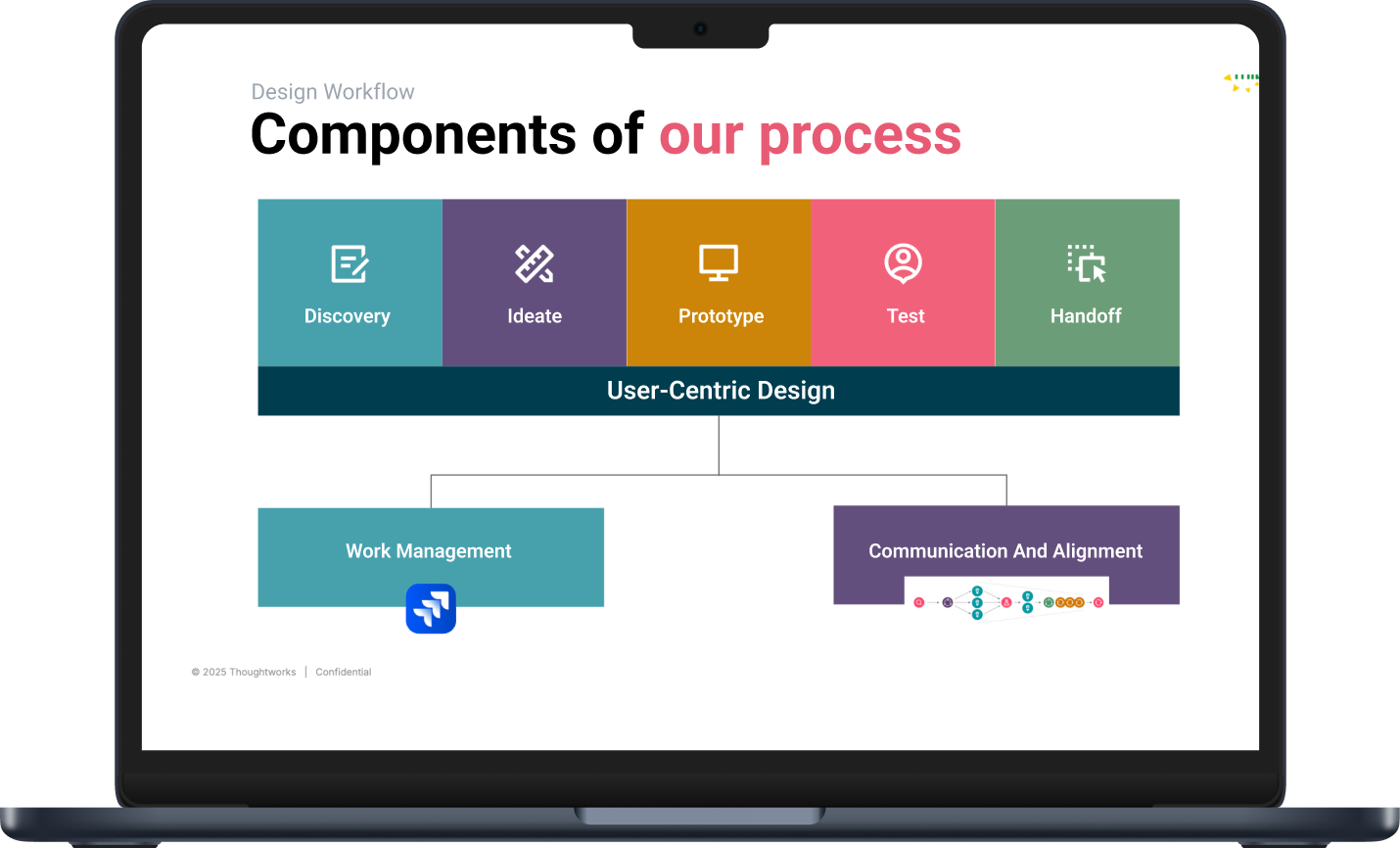
01 — Sprint Planning
Planning to eliminate overwork
I introduced structured sprint planning sessions — something the team had never had. Each cycle started with explicit capacity planning: what we could actually commit to, what was out of scope, and what moved to the next sprint. This single change stopped the pattern of constant overload and made delivery predictable for the first time.
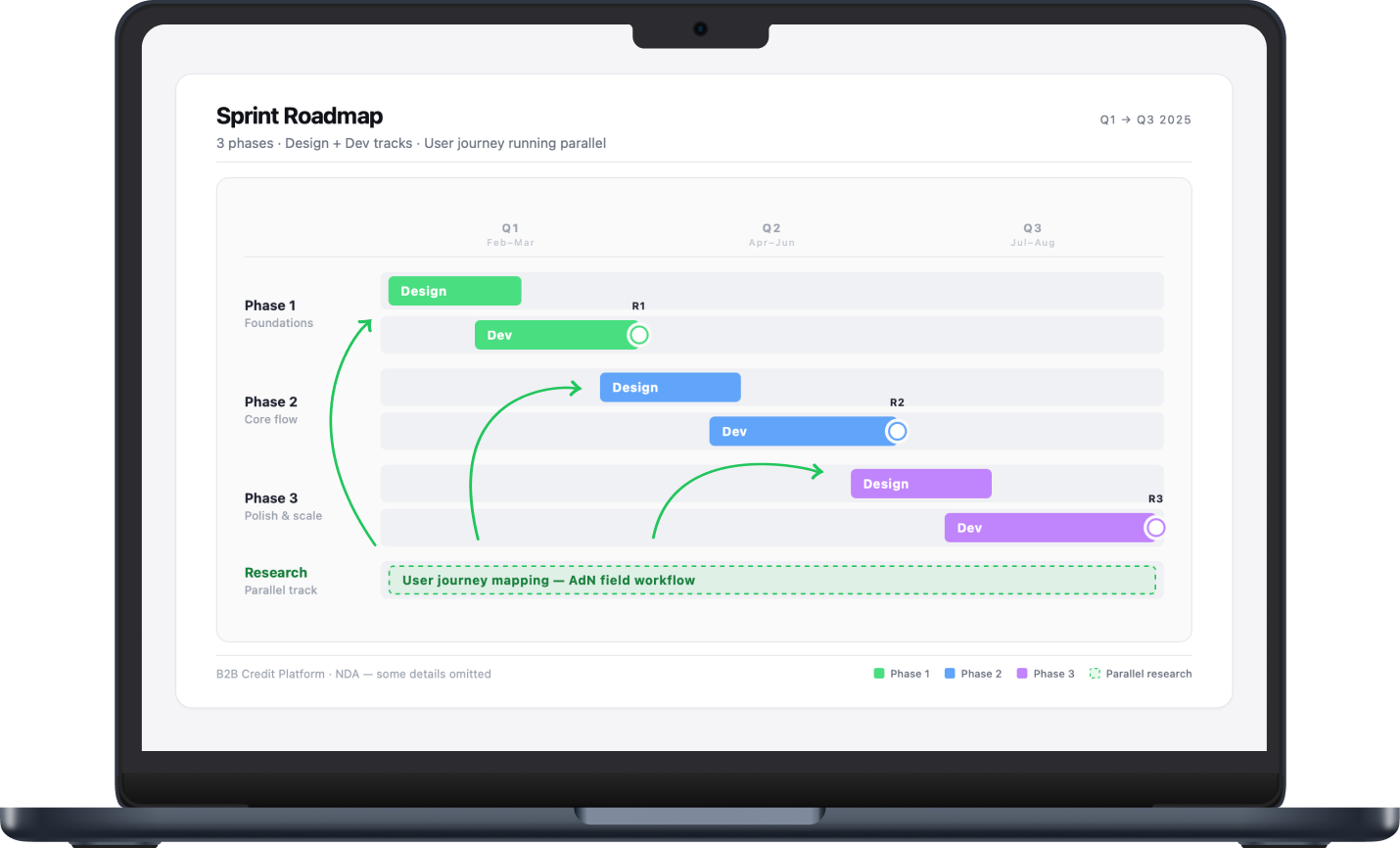
02 — Design Roadmap
Roadmap visible to all PMs and stakeholders
I created and maintained the first design roadmap in the project's history — and made it a shared artifact. Every Product Manager could see what design was working on, what was coming next, and how design decisions connected to product delivery. This eliminated the "what is design doing?" friction and turned design into a predictable, strategic partner instead of a reactive service.
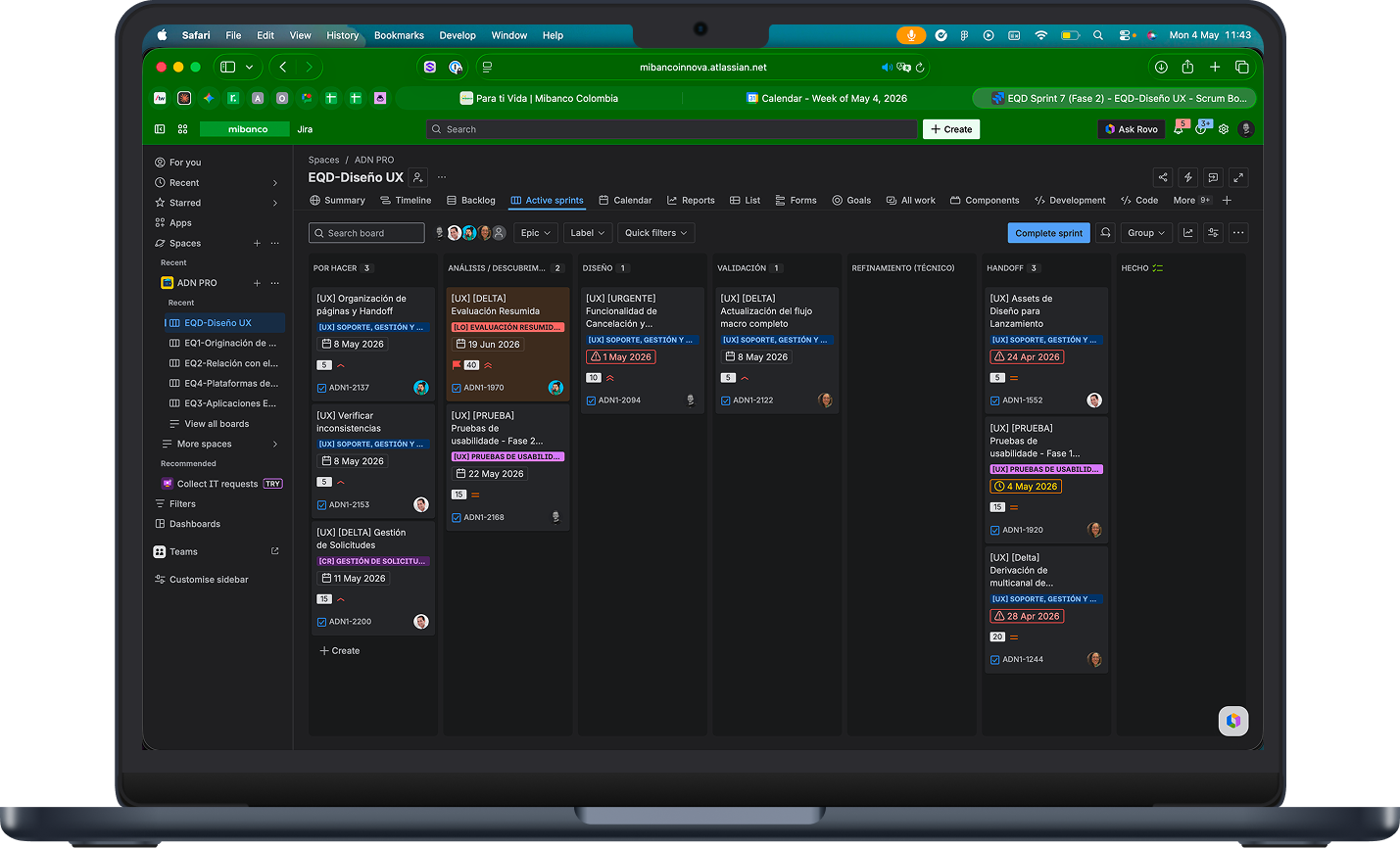
03 — AI & Design Jira
AI-powered cards to standardize every process
I built a dedicated Design Jira board with AI-generated ticket templates for each design phase. Instead of writing cards from scratch every sprint, the team used structured templates — automatically populated with the right fields, acceptance criteria, and definition of done for that type of task. This standardized how we documented work, reduced back-and-forth with Engineering, and made handoffs predictable and consistent across the entire team.
04 — 7 Ceremonies
7 alignment spaces where there were zero
I established the full ceremony stack: sprint planning, design critique, usability test review, cross-team alignment with Product and Engineering, weekly client sync, desk checks, and retrospectives. Each ceremony had a clear owner, agenda, and outcome. The 3-week sprint cadence gave everyone — including the client — a rhythm they could count on.
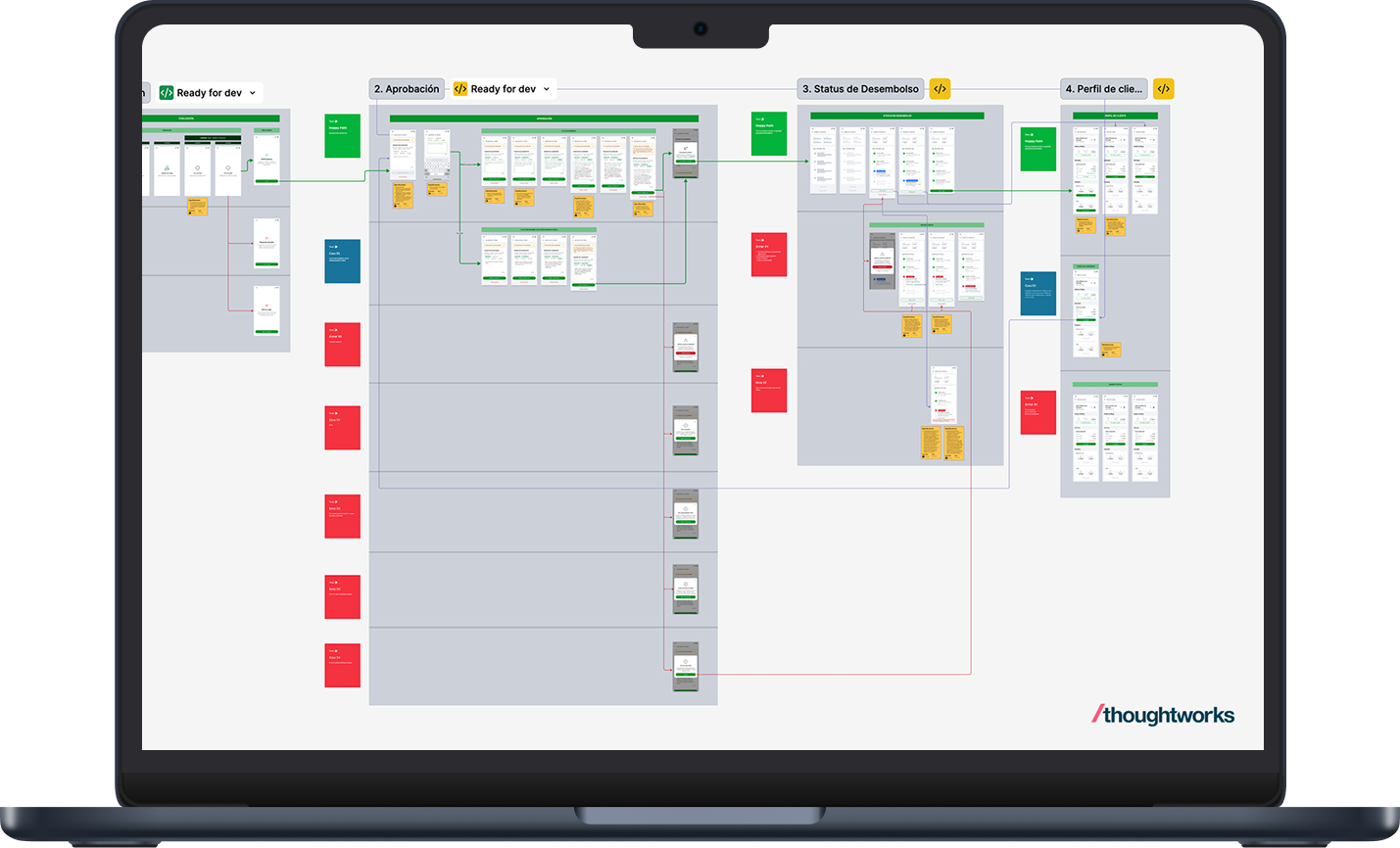
System thinking
From chaos
to clarity.
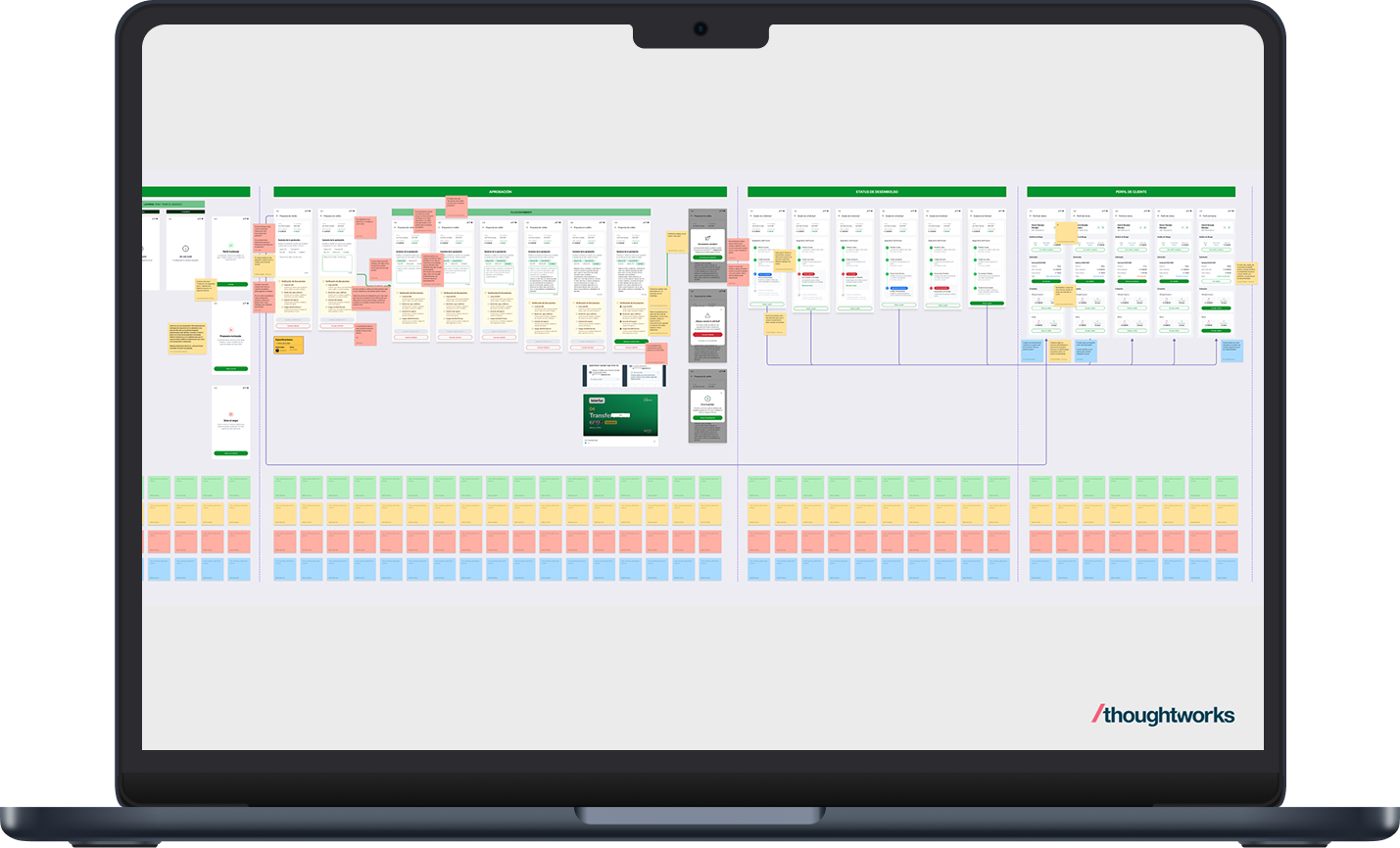
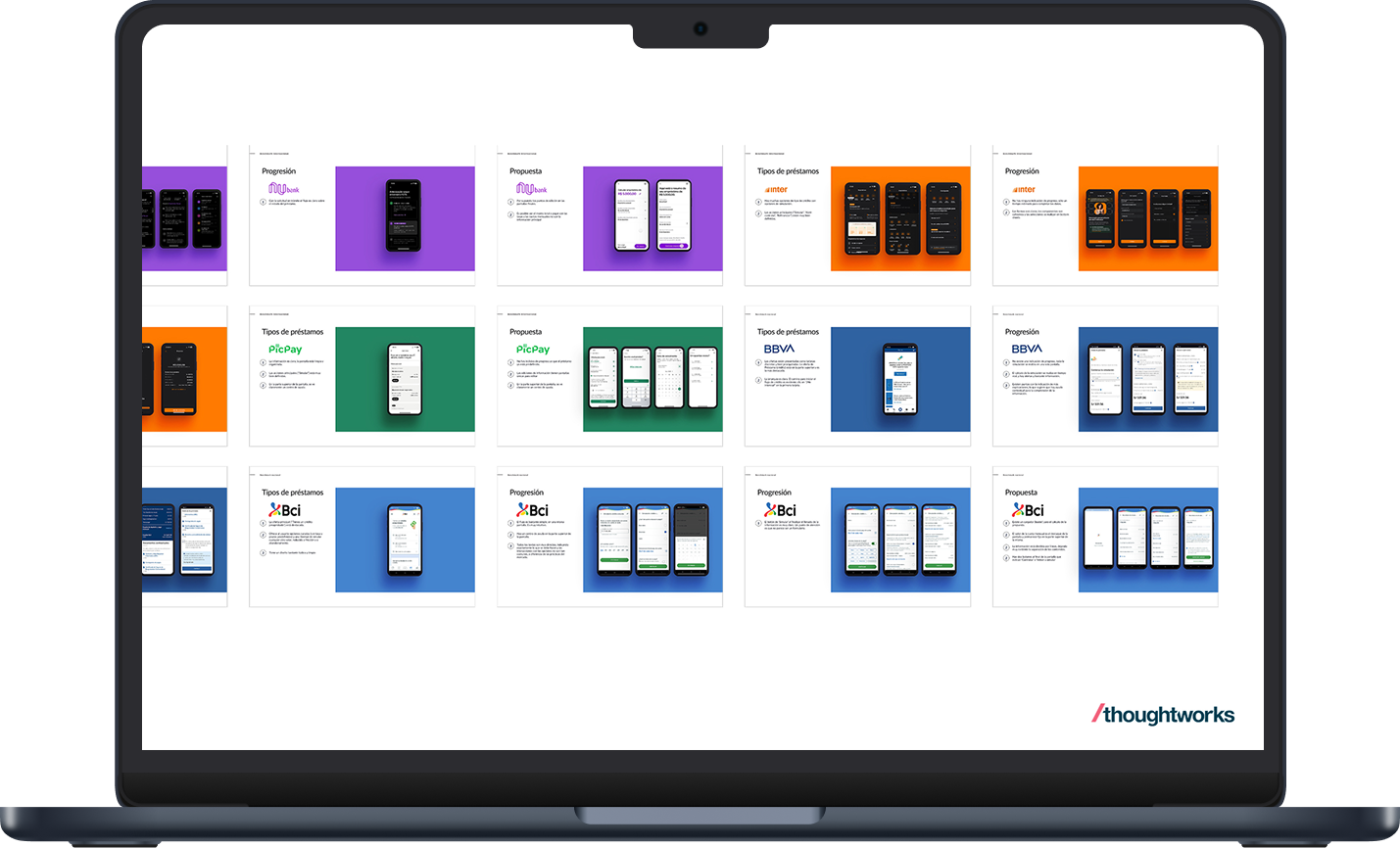
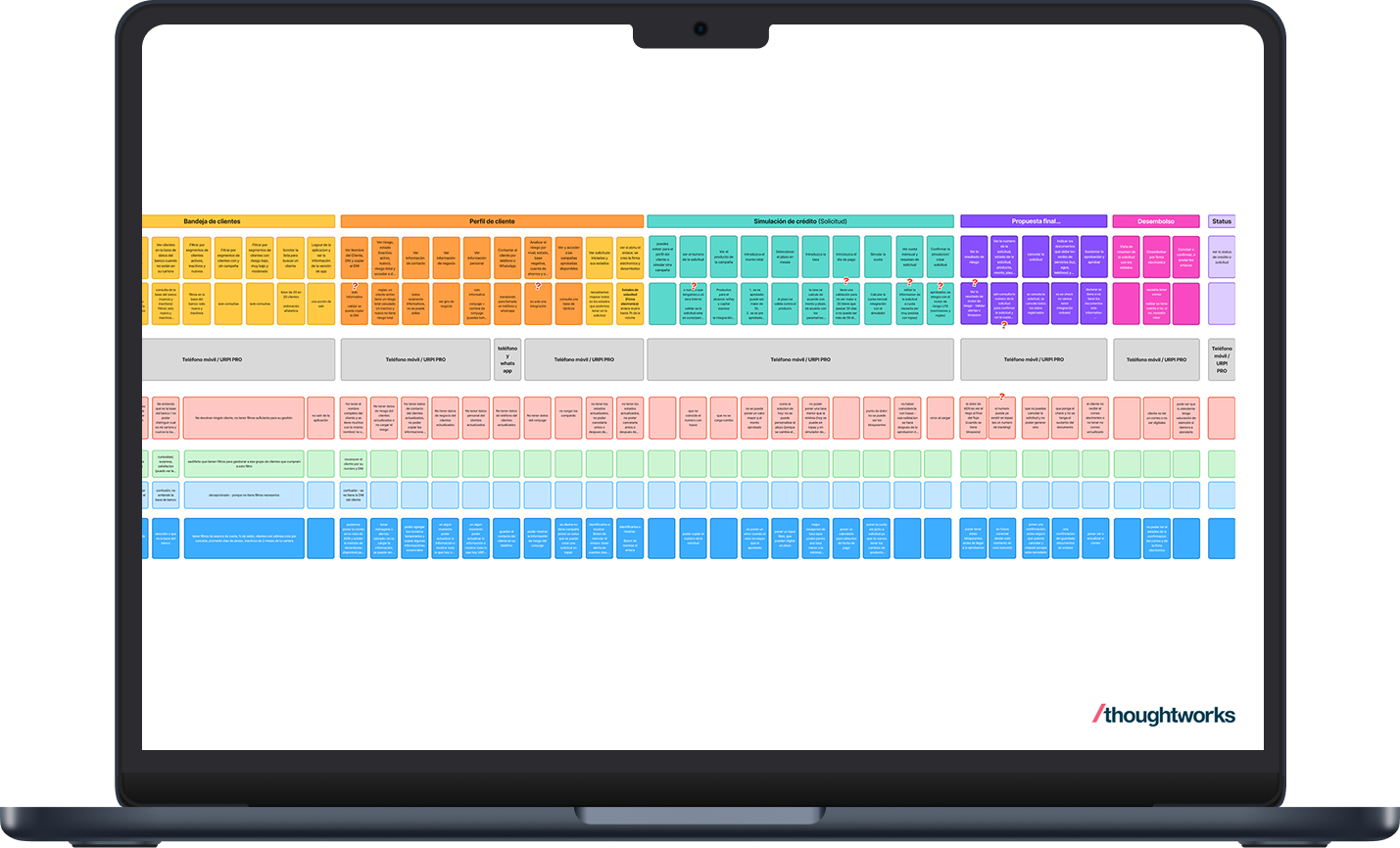
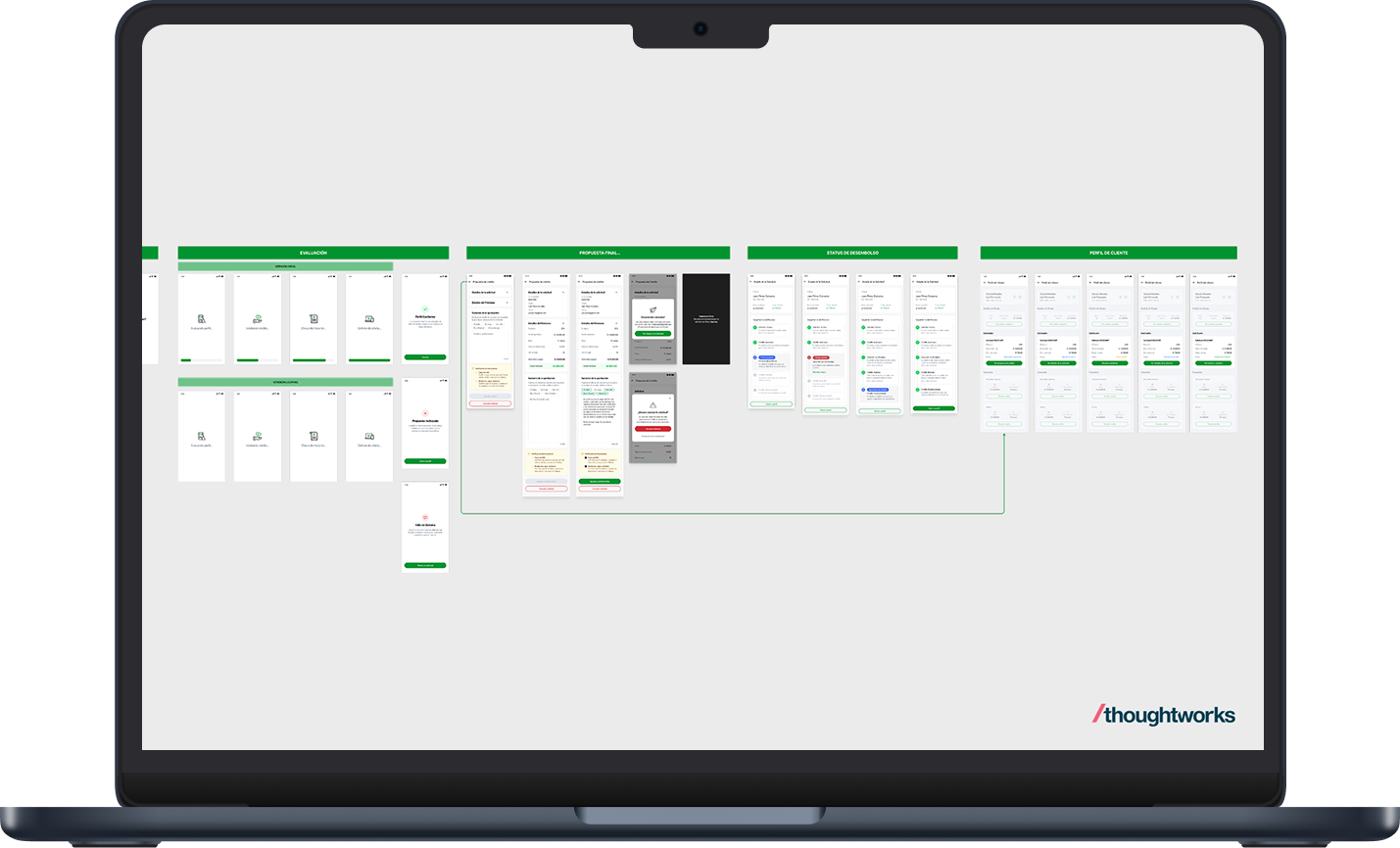
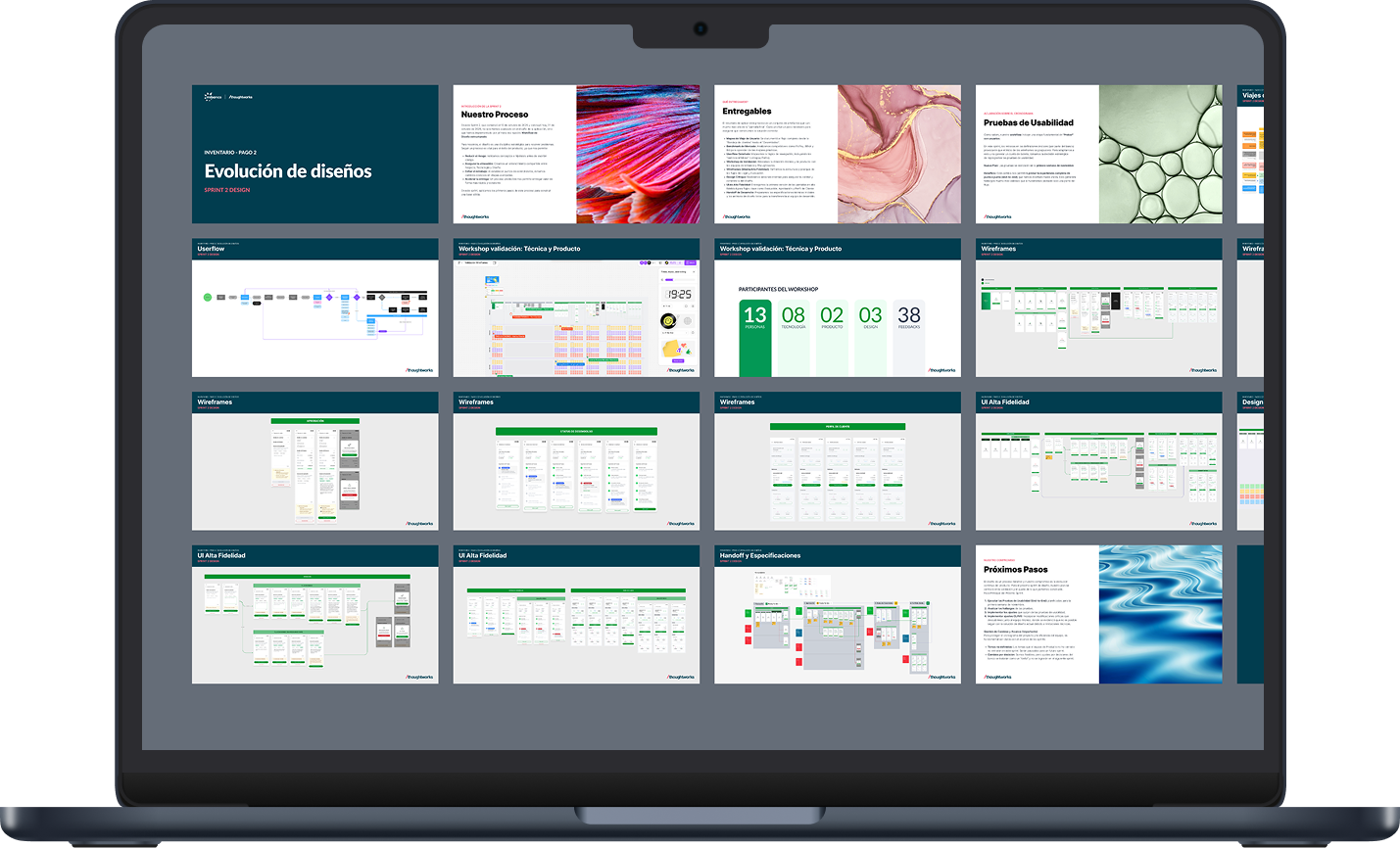
The entire credit platform mapped end-to-end on a single board — every flow, state, and dependency in one place.
Team & people
Built and led a team of 3.
Managing people and the process at the same time — while working in Spanish, not my native language.
Discovery Track
Research, usability testing, future-sprint preparation
Delivery Track
UI design, handoff to Engineering, client alignment
Beyond the workflow split, I led recruitment — personally interviewing and onboarding a third designer — and managed the full transition plan: roll-off for the outgoing designer, onboarding structure for the new hire. All while protecting the account's delivery continuity and maintaining client confidence through the transition.
Results
Team efficiency. Process health.
Client trust rebuilt.
Design delivery cycle
Alignment spaces created
Sprint structure
Visibility across all PMs
Jira standardization
Client relationship
Delivery cycle reduction
Recognition
Validated from every direction.
Formally designated Leader of the UX Front and added to the Extended Client Leadership Team — in under two months.
Designated Leader of the UX Front
Formally by delivery principal
Extended Client Leadership Team
Rare for a designer at Senior grade
Consistently Exceeded Expectations
Annual assessment 2025–2026
All negotiations in Spanish
Not my native language — Portuguese
You didn't just identify the chaos — you solved it. The 5-phase plan, the sprint structure, the roadmap — the most important part was how you built it: by involving PMs, Tech Leads, and the client for validation. That isn't the work of an executor; it's the work of a leader.
Your performance doesn't just meet — it consistently exceeds the expectations of the Senior grade. You are unequivocally operating at a Lead level. Your formal designation as Leader of the UX front is the obvious and deserved recognition of that fact.